Why Mobility Doesn't Stick
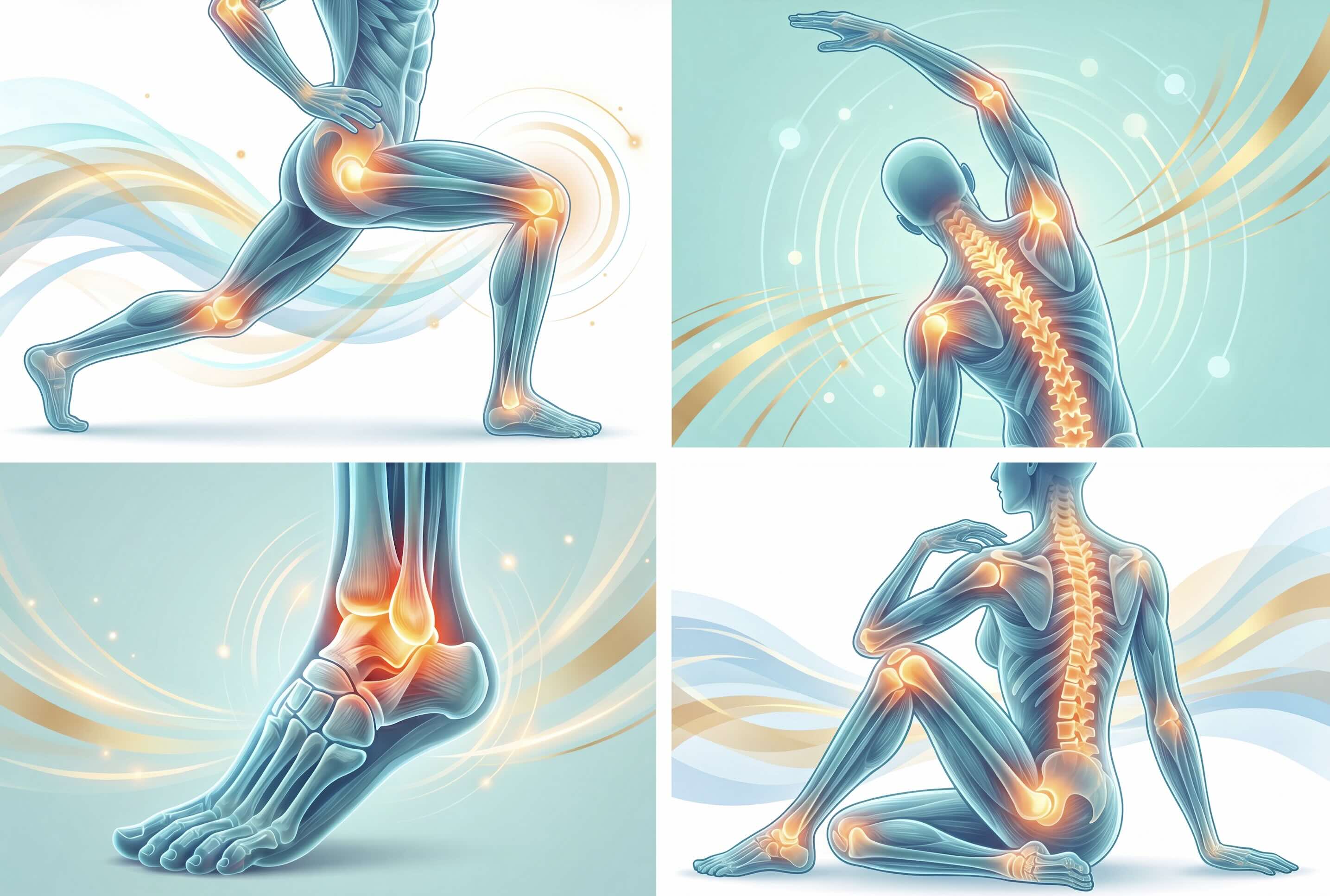
Most people have lived this. You stretch your hip flexors. You feel longer through the front of the hip. You stand up, walk around, maybe test it with a lunge, and the position feels available in a way it didn’t an hour ago. By the next session, it’s gone. The tightness is back. The range you found has reverted to its starting value.
The easy explanation is that you didn’t stretch enough, or didn’t stretch often enough, or didn’t stretch the right way. Sometimes that’s true. But the deeper issue is that stretching alone is an incomplete input. Range that shows up in a session and disappears by next week isn’t a failure of effort. It’s a failure of the signal the body received.
Stretching changes tissue tolerance and neural permission. The nervous system provides a window of time after exposure. That window closes. Without something telling the system that the range is worth keeping, it reverts to its defaults because those defaults are calibrated to what you actually use.
Range you don’t train is range you’re renting.
Hip Extension as the Worked Example
Hip extension is a useful area to focus on because almost nobody trains it directly. People stretch their hip flexors all the time. The couch stretch, the kneeling lunge, and the half-kneeling position with the back hip driven forward. Most lifters and most general trainees have done some version of these for years and ended up roughly where they started.
The reason is structural. The hip flexors get stretched, but hip extension as a usable range gets no training stimulus afterward. Walking produces extension, but most people walk with such a short stride and so little posterior drive that they never approach end range. Running gets closer, but most recreational runners load the extension passively rather than actively. Squatting, deadlifting, and lunging all happen in front of the body. The training week is full of hip flexion work. End-range hip extension shows up in the warm-up and never again.
So the input is a stretch followed by nothing. The permission window opens, and then the system spends the rest of the week reinforcing the pattern the stretch was trying to change.
What’s Actually Missing
Three things determine whether range sticks. Load, intent, and frequency.
Load is the part that stretching most often ignores. Tissue adapts to the demand placed on it, and passive range with no resistance is low-priority information for the body. The position gets logged but not prioritized. Loaded end-range work (irradiation through the joint at end range, eccentric training through the new range, isometric contractions at the position) tells the nervous system that the range is functional, not just available. The FRC system formalizes this through PAILs and RAILs. The principle behind it is older than the system: tissue responds to stress under tension, and the tension has to be intentional. Sinking into a stretch and waiting isn’t the same as producing force from the position.
Intent is the next layer. There’s a difference between getting into a position and owning it. Sitting in 90/90 with your weight stacked passively over the front shin is not the same as actively producing internal rotation torque through the front hip. Hitting end range in a hip flexor stretch is not the same as actively pulling yourself deeper through the back hip’s extensors and rotators. Intent is what separates passing through a range from controlling it. Range without control is range you can reach but can’t use under any meaningful demand. The body knows the difference, even when the trainee doesn’t.
Frequency is the part nobody wants to hear. Adaptation requires repeated exposure. One mobility session a week is not enough signal to override years of patterning. The reason your range disappears between sessions is that you spent six days reinforcing the default and one day asking for a new one. The math doesn’t work. You don’t have to train mobility every day for it to stick, but you have to train it often enough for the new input to become part of the body’s running average. For most people, that’s three to five exposures a week, brief, with intent and some load. Not an hour-long routine. Five minutes that actually demand something from the tissue.
What This Looks Like for the Hip Flexors
The honest version of training hip extension isn’t more stretching. It’s loaded end-range work.
A simple progression looks like this. Get into the kneeling hip flexor stretch position with the back hip squared and the pelvis posteriorly tilted enough to actually load the front of the hip. Hold the end range for a minute or two to establish the position. Then, without leaving the stretch, drive the back knee down into the floor as if trying to push your knee through the ground. That’s the front hip extensors firing at length. Hold the contraction for 10 to 20 seconds, ramping up the intensity, then relax. Now try to move slightly deeper into the stretch. Reproduce the same contraction at the new position.
That’s the PAILs/RAILs structure. The pattern matters more than the system label. You’re loading the tissue at length, asking the nervous system to produce force from a position it normally avoids, and then earning a small amount of new range that the body has now experienced under tension.
Layer in standing work that actually uses hip extension. Single-leg glute bridges with the working leg’s hip driven into full extension and held. Reverse lunges with intent to push the back hip forward at the top. Walking with a longer trailing stride and a conscious posterior drive. None of these are dramatic. All of them tell the body that hip extension is functional range.
This is the load-and-intent piece. Frequency takes care of itself if the work is brief enough to do most days.
Where This Goes Wrong
This argument has limits, and the limits matter.
Hypermobile readers don’t need more range. They need control of the range they already have. The mechanism here (loaded end-range work to produce ownership) still applies, but the goal is stability and capacity at the available positions, not chasing more range. For these readers, the stretching itself is often the problem, not the solution.
People in active pain or rehab contexts need a clinician, not a Field Notes essay. The principles still hold, but the application has to be calibrated to tissue state and stage of healing.
Structural variation is real. Some people have hips that won’t extend past a certain point because of how the joint is built, not because of soft tissue restriction. Loaded work at the available end range still has value for those people, but no amount of training will change bone shape. Knowing the difference between a built-in limit and an untrained limit is part of why coaching matters.
What to Do with This
The takeaway isn’t that stretching is useless. It’s that stretching alone is an incomplete signal. If you want range that sticks, the stretch is step one, not the whole intervention. Step two is loading the position; step three is making the position part of how you actually move during the week. And step four is doing it often enough that the body believes you.
Range you train is range you keep. Range you don’t is range you’re renting from a nervous system that will take it back the moment you stop paying.
Brian Murray is a mobility coach with sixteen years of experience helping people move better, feel stronger, and train without pain. He’s the founder of Motive Training, a personal training facility in Austin, TX, and the creator of Motive Mobility, an online platform focused on joint health and movement longevity. Drawing from Functional Range Conditioning (FRC), WeckMethod, and years of hands-on coaching, Brian’s approach bridges the gap between mobility and performance—making complex concepts simple and actionable for anyone who wants to train and move with purpose.